
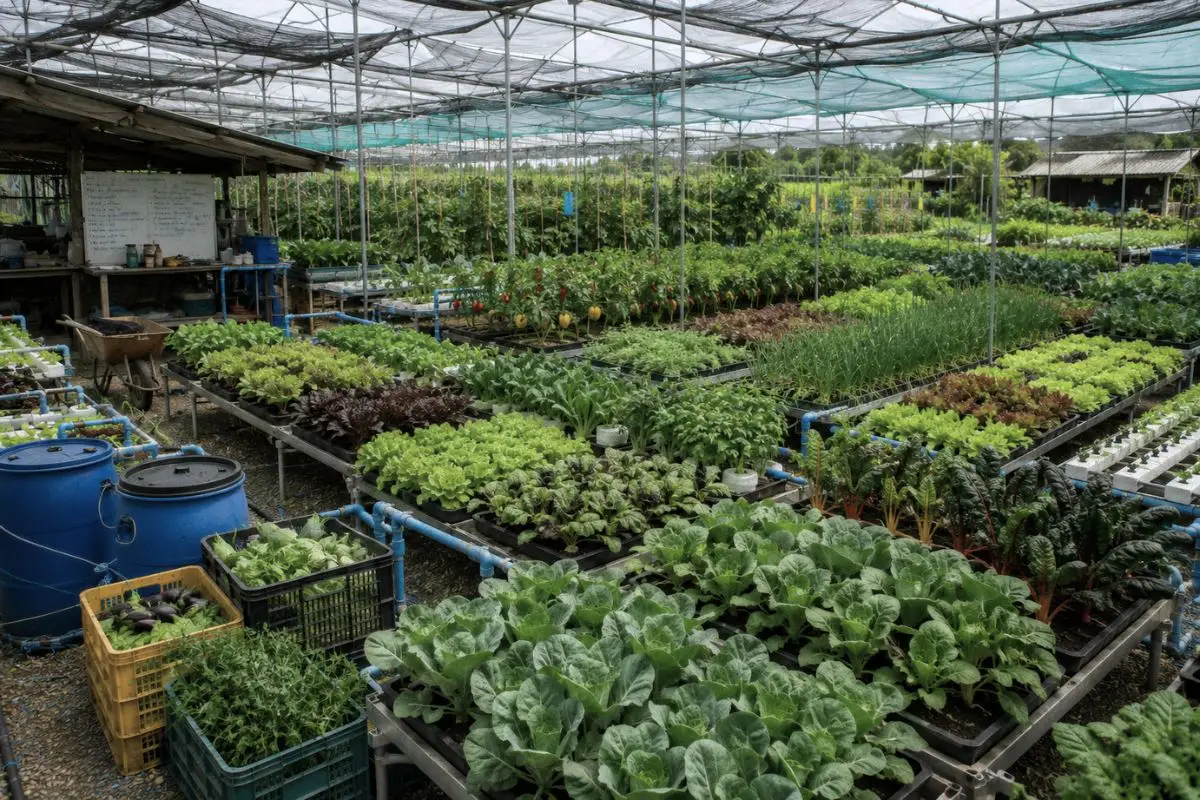
Beating the Seasons: How Protected Cultivation Is Helping Filipino Growers
Cached purge test – 1789850108385
Agriculture: The Backbone of the Philippine Economy
In a recent analysis by the Japan International Cooperation Agency (JICA), agriculture has been reaffirmed as the cornerstone of the Philippine economy. This sector, long recognized for its pivotal role in economic development, continues to…
Free Webinars on Fish Processing
These free webinars for 2021 are brought to you by Industrial Technology Development Institute under DOST. 𝗙𝗥𝗘𝗘 𝗪𝗘𝗕𝗜𝗡𝗔𝗥𝗦 𝗢𝗡 𝗙𝗜𝗦𝗛 𝗣𝗥𝗢𝗖𝗘𝗦𝗦𝗜𝗡𝗚 – January 26, 2021 – Fermented Fish Processing– February 26, 2021 – Dried Fish…
List of Vegetable Suppliers
Owned or operated directly by farmers, cooperatives, or the government.
P 50-M allotted for Albay Farm Rehabilitation under PLEA
The Department of Agriculture (DA) has allotted funds to be used for the rehabilitation of farms affected by Mayon Volcano eruption. Due to the ongoing activity of this volcano, damaged has reached a total land…
ATI’s 2018 PDOC kicks off
The Agricultural Training Institute (ATI) welcomed the new batch of trainees as this year’s Pre-Departure Orientation Course (PDOC) kicked off. For 2018, twenty-three (23) young farmers from all over the country will be preparing prior…
Japanese Chocolate maker to give training to Cacao Farmers in Davao
Dari-K, a Japanese-owned and based chocolate maker company, together with Japan International Cooperation Agency (JICA) recently finished its feasibility study focusing on the promotion of cacao production in Mindanao as part of its partnership program…
The Dioscoro L. Umali Achievement Award in Agricultural Development search is on!
The biennial search for exemplary individuals in the Southeast Asia is here once again. The Dioscoro L. Umali Achievement Award recognizes outstanding persons who have contributed to the advancement of agricultural development in the aforementioned…
Philippine Fisheries output decreases as aquaculture increases
From a 6.27 percent drop in 2016, the Philippine aquaculture has bounce back in 2017. Based on the data from Philippine Statistics Authority (PSA), the aquaculture sector hit 2.24 metric tons in 2017 or an…
Philippine Farming: A Lost Art?
The Philippines is known as an agricultural country mainly because of its vast agricultural land and rich vegetation. In fact, the country once prided on being the top exporter of rice, abaca, coconut and other…
Why Join PhilFARM?
The Philippines is a highly agricultural country. This is evident in the number of professionals and entrepreneurs connected and involved with agri-businesses such as sectors in food & agricultural supply, production, cultivation, training, breeding, manufacturing,…
DA’s SURE Program
The Philippines is endowed with bountiful resources. Its rich soil naturally grows tropical trees and plants. Our country even boasts of many natural rainforests and rich biodiversity. However, being situated on the Pacific Ring of…